Introduction
Falling in love with someone who also has ADHD feels amazing at first. The energy is unmatched, the conversations last until 4 AM, and the mutual understanding is beautiful. But what happens when the honeymoon phase ends, and two neurodivergent brains have to manage a household together?
When both partners have ADHD, daily life can quickly turn into chaotic survival. The challenges multiply—especially if your ADHD symptoms look completely opposite
The Clash of Two Different ADHD Types
ADHD is not a one-size-fits-all condition. In a relationship, you often see a clash between two extreme expressions of it:
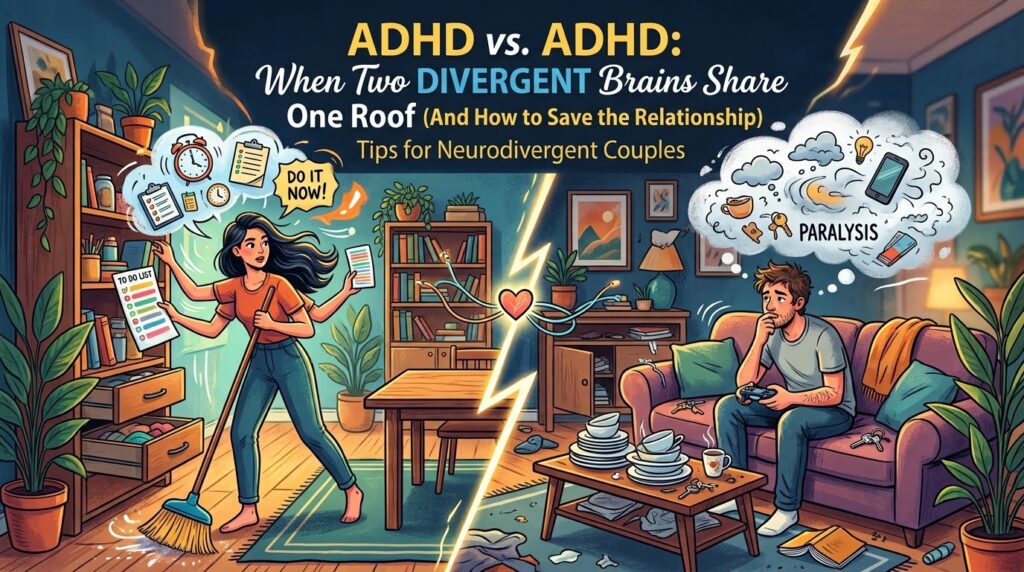
Partner A: The Hyperactive & Hyper-organized Spinner. They cope with their ADHD through intense restlessness. They constantly clean, start five projects at once, and feel an overwhelming anxiety if things aren’t done immediately.
Partner B: The Inattentive & Paralyzed Dreamer. Their ADHD shows up as severe executive dysfunction. They get stuck in “ADHD paralysis” on the couch, forget where they put their keys two seconds ago, and lose track of time completely.
When these two live under one roof, frustration builds up fast. Partner A feels like they are parenting a child. Partner B feels constantly criticized, judged, and never good enough.
The Biggest Hurdles in Shared Daily Life
Living together exposes the rawest parts of ADHD management. Couples usually struggle with three main areas
- The Chore War: Housework becomes a battlefield. One partner might hyper-focus on cleaning the bathroom for four hours, while leaving a mountain of dishes in the sink for days. The mental load is rarely shared equally.
- Emotional Dysregulation: ADHD brains feel emotions intensely. A simple disagreement about who was supposed to buy milk can trigger a massive emotional storm or complete shutdown (stonewalling).
- The “Out of Sight, Out of Mind” Trap: Bills get forgotten. Appointments get missed. Important relationship milestones fade into the background because both partners struggle with long-term planning.
How to Make an ADHD-ADHD Marriage Work
You don’t need to fix your brains; you need to fix your systems. Here are the first steps to restore peace:
- Ditch the Traditional Roles: Forget who should do what. Assign chores based on dopamine. If one partner hates dishes but loves vacuuming, let them own that task fully.
- Externalize Everything: Stop relying on your memories. Use shared digital calendars, giant whiteboards in the kitchen, and automated bill payments.
- Practice Radical Empathy: Remember that your partner’s forgetfulness or hyperactivity is a neurological symptom, not a lack of love for you.
When Love Isn’t Enough: The Power of Professional Help
Managing an ADHD relationship by yourself is exhausting. Traditional marriage counseling often fails neurodivergent couples because standard relationship advice doesn’t account for how an ADHD brain works.
If you feel like you are stuck in a endless loop of resentment and exhaustion, professional couples therapy tailored to neurodivergence can be a game-changer.
If you are ready to stop fighting your brains and start fighting for each other, we highly recommend checking out specialized. It allows both of you to work with a licensed therapist who actually understands ADHD, all from the comfort and safety of your own couch. You don’t have to navigate this chaos alone.
Be sure to bookmark my page for the next column! I’ll tell you how not to wreck your relationship over your own ADHD.